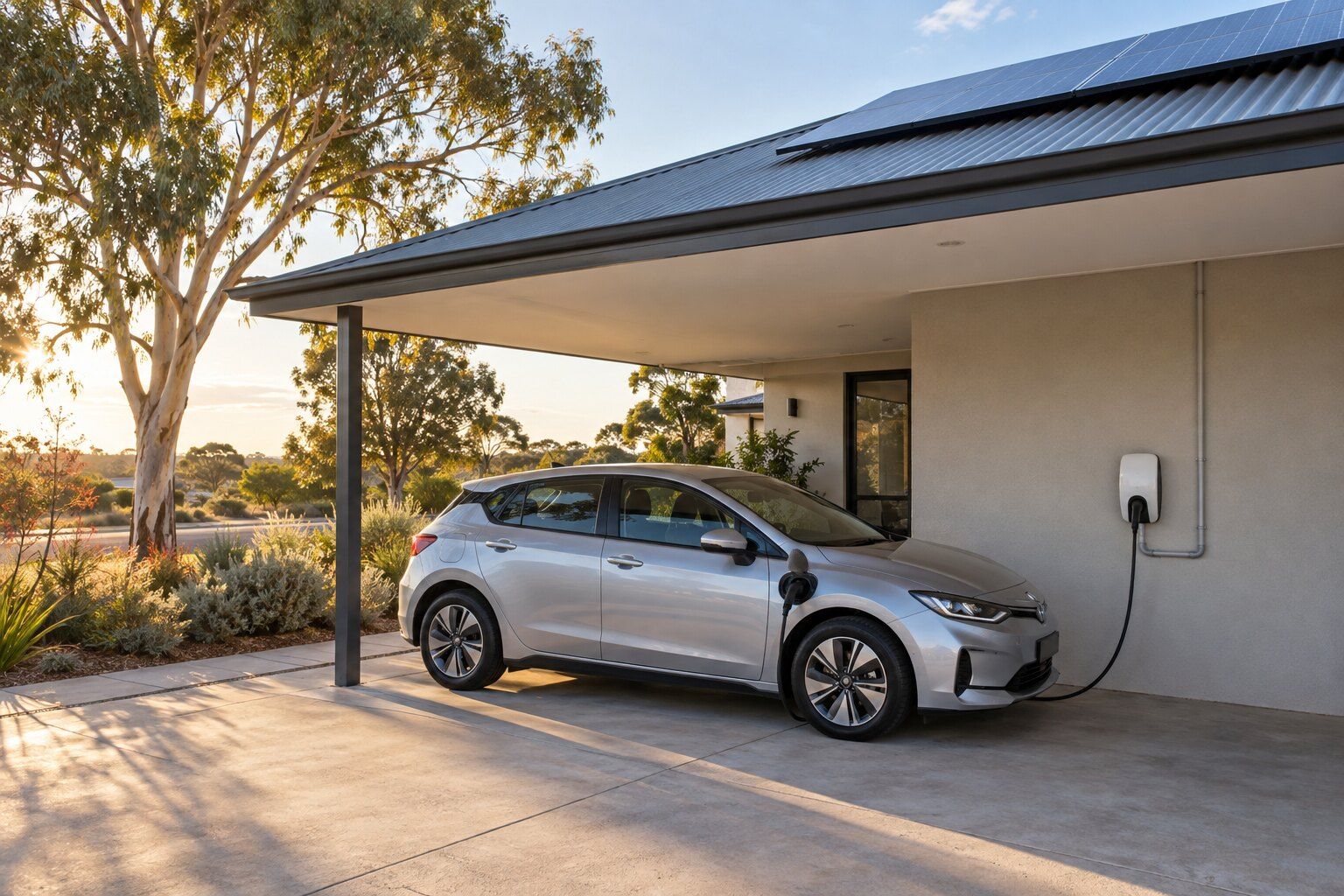
Why fit a home charger?
The cable that comes with most cars plugs into a normal power point and adds roughly 10 to 15 km of range an hour. A 7 kW wall charger adds roughly 40 km an hour, enough to fill most cars overnight. It's also built for daily charging, with its own circuit and safety protection.
Choosing a charger
7 kW single-phase
The right choice for most homes. It works on a standard single-phase supply and suits nearly every EV.
11 or 22 kW three-phase
Only worth it if you already have three-phase power and your car can charge that fast. Many can't take more than 7 to 11 kW at home.
Solar-smart chargers
These chargers can follow your solar output, so the car soaks up power you'd otherwise export for a few cents. They cost more upfront. Check they work with your inverter before you buy.
What affects the installation
- Distance from the switchboard to where you park, and the route the cable takes
- Whether cable goes through the roof space, along a wall or underground to a detached garage
- Spare capacity and space on your switchboard for a new circuit
- The wall you're mounting on, and whether it's under cover
- Larger chargers that need a supply upgrade from Western Power
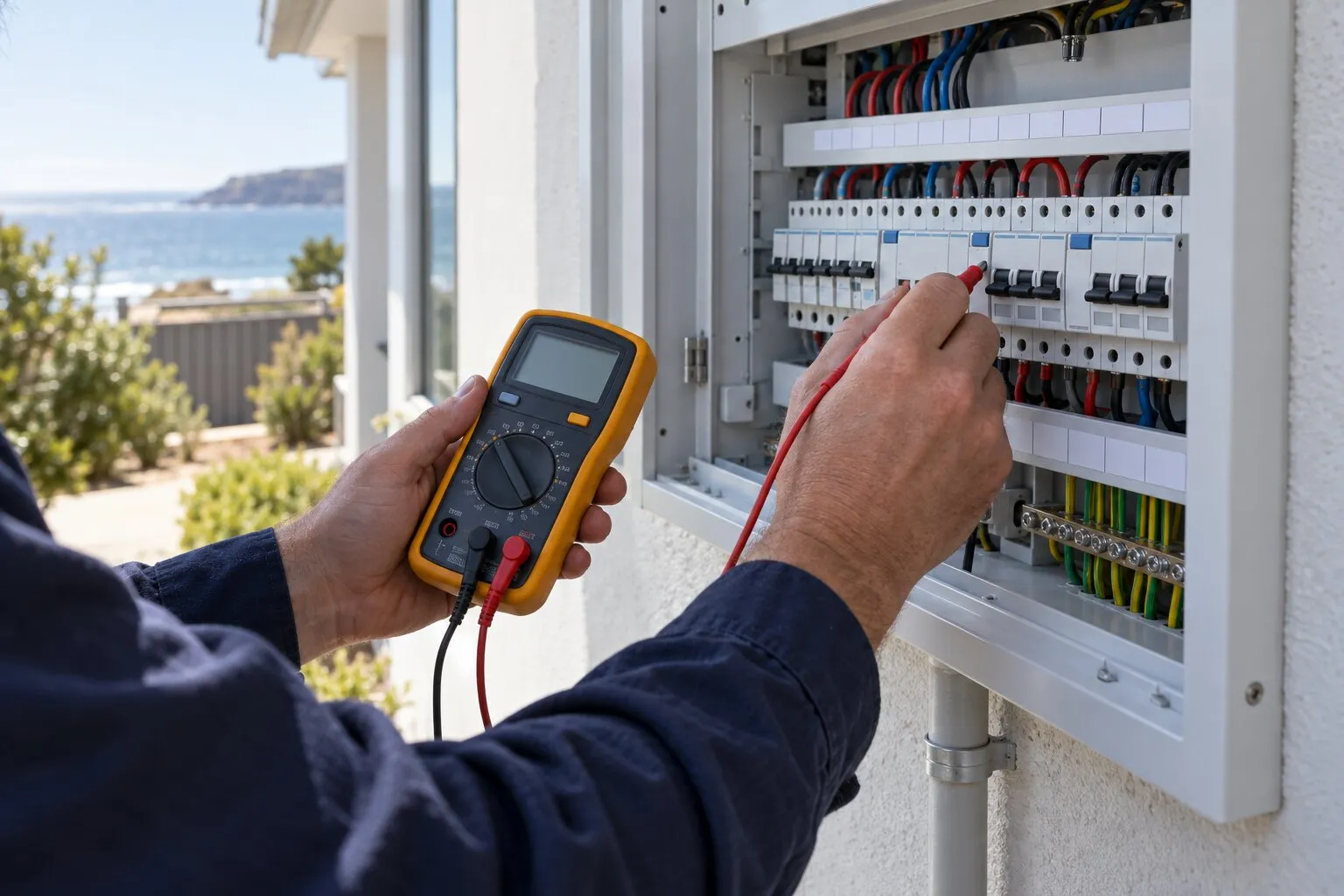
How much does EV charger installation cost?
Published WA prices for a 7 kW charger, supplied and installed, start around $1,350 to $1,650 including GST for a straightforward job. If you've already bought the charger, install-only costs less because you're paying mainly for labour, cable and protection.
| Job | Typical price | What changes the price |
|---|---|---|
| 7 kW home charger, supplied and installed | $1,350 – $1,650 | Short cable run, spare switchboard capacity |
| 7 kW solar-smart charger, supplied and installed | $1,750 – $2,400 | Charger model, solar and battery integration |
| Three-phase (up to 22 kW) charger | $2,450 – $3,600 | Three-phase supply, cable run, charger model |
Guide prices only, including GST, based on fixed prices published by Perth electricians in September 2026. Busselton jobs can differ with travel and site conditions. Your electrician confirms the price for your job before work starts.
Charging with solar
If you have rooftop solar, daytime charging can use power you'd otherwise sell back cheaply. A solar-smart charger manages this automatically. A home battery adds options, but charging a car from a battery usually isn't the best use of it. Tell us what you have and the electrician can suggest a setup.
What to have ready
- Your car's make and model
- The charger make and model, if you already have one
- Where you park, and roughly how far that is from the switchboard
- Whether you have solar or a battery
Common questions
Can I just use the charging cable that came with my car?
Yes, most cars come with a cable that plugs into a normal power point. It's slow, adding roughly 10 to 15 km of range per hour, and it's worth having the power point and circuit checked if you'll be using it every night. A wall charger is faster and designed for the job.
Can an electrician install a charger I've already bought?
Usually, yes. Install-only is common. Put the make and model in your request so the electrician can check what it needs before they arrive.
Do I need to upgrade my switchboard?
Sometimes. The charger needs its own circuit and your board needs spare capacity. Older boards with fuses usually need an upgrade first. See switchboard upgrades.
Do I need three-phase power for a fast charger?
Only for chargers above 7 kW, and many cars can't charge faster than 7 to 11 kW at home anyway. For most households a 7 kW single-phase charger is the sensible choice. Check your car's maximum AC charging rate before paying for three-phase.
Can the charger go outside or in a carport?
Yes. Chargers rated for outdoor use are made for carports and driveways. The electrician will choose a mounting spot that suits your parking and keeps the cable off the ground.
How long does installation take?
A straightforward install near the switchboard is often done in a few hours. Long cable runs, a detached garage or a switchboard upgrade add time.